Most teams sending cease and desist letters fall into one of three setups, and the right tool depends mostly on volume and who is doing the work. A partner drafting a single letter to a former contractor calls for a different stack than a brand-protection team firing off 200 takedown notices a month from a queue of trademark hits.
Here are the three patterns and what to use for each.
Low volume: Word or Google Docs templates with mail merge
For one-off letters, the simplest reliable path is a master template in Word or Google Docs with placeholders for recipient name, jurisdiction, the conduct at issue, the demand, and a response deadline.
In Word, this is the built-in mail merge feature pulling from an Excel sheet of recipients. In Google Docs, Apps Script (or an add-on like AutoCrat) does the same job. Save the output as PDF and send.
This is fine up to a few letters a month. The downsides surface when you need conditional clauses (IP vs harassment vs defamation), an audit trail, or recipient-specific service language. Mail merge does not handle conditional logic gracefully, and the file management gets messy fast.
Recurring legal practice work: legal document automation platforms
If a law firm is generating these letters regularly with a real intake flow, legal-specific document automation tools fit better. Two well-known options in the category are Gavel (formerly Documate, rebranded in 2023) and Mitratech HotDocs.
Both let you build templates with conditional logic, link them to an intake form, and generate a final document from the form inputs. Gavel is no-code and built around a visual editor. HotDocs is enterprise-grade and uses its own scripting language, which is more powerful for complex logic but takes longer to set up.
This is a good fit when attorneys (not engineers) need to maintain the templates and the intake flow, and the letters are part of a billable practice rather than an automated product.
At-scale or programmatic: PDF generation API with template fill
If the cease and desist letters are part of a product workflow (a brand protection platform, an anti-piracy operation, a marketplace handling counterfeit listings, an HOA enforcement queue), the work is no longer about a lawyer in a UI. It is a database row triggering a letter.
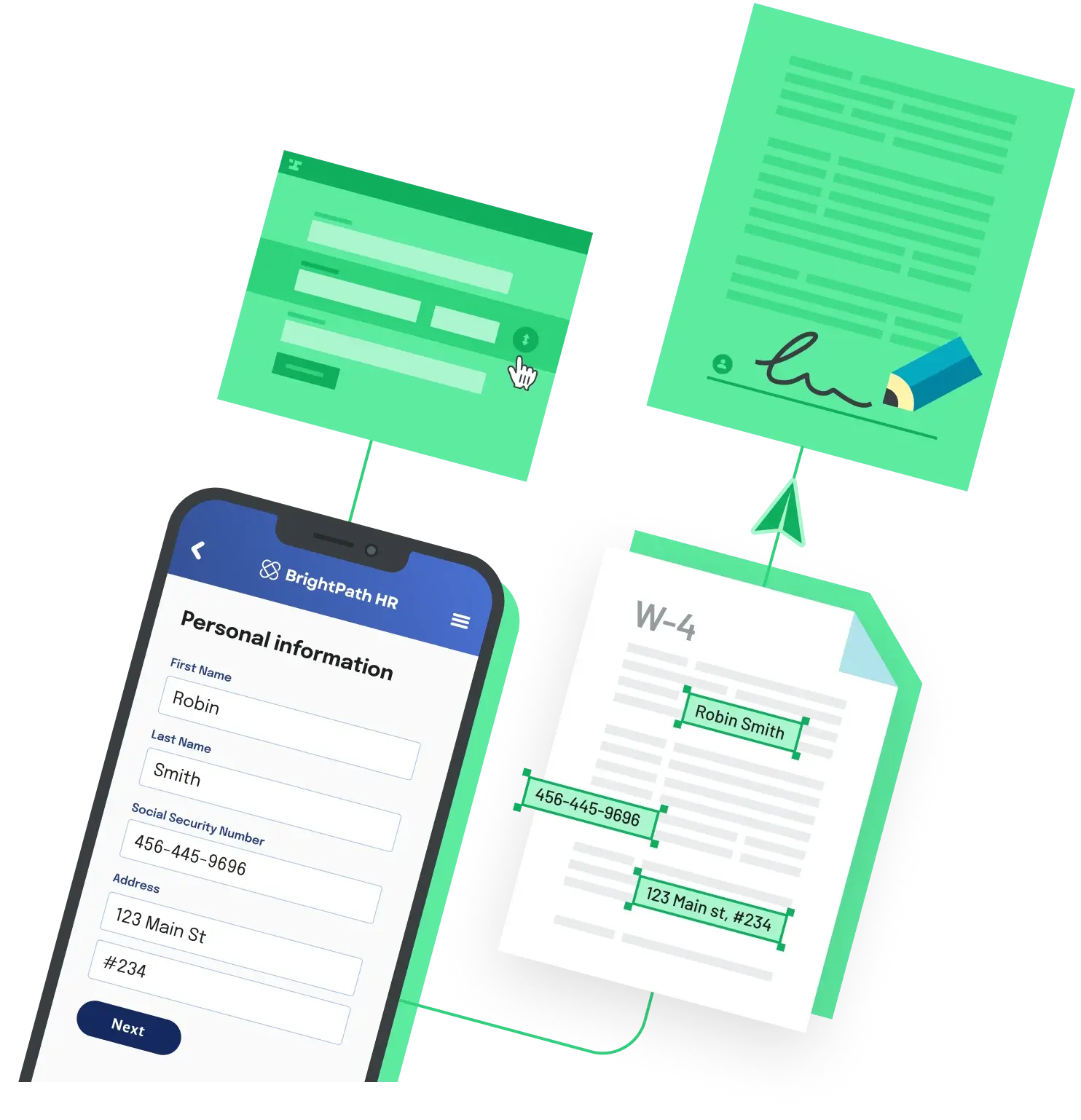
For that, a PDF generation API is the right shape. You upload your letter template once, mark the fillable fields (recipient, jurisdiction, conduct, demand, deadline), and POST JSON to fill it. The API returns the finished PDF, ready to send or archive. Pairing the API with a queue or a scheduled job lets one engineer support thousands of letters a month without anyone touching a UI.
What to watch out for
- Jurisdiction language. Cease and desist letters often reference specific statutes (DMCA 17 USC 512 for copyright, the Lanham Act for trademark, state unfair-competition laws). If you operate across states or countries, the template needs branching or per-jurisdiction variants.
- Service and proof of delivery. Some scenarios require certified mail, others accept email. Build the delivery channel into the workflow, not the template.
- Retention. Keep a copy of every letter sent, with timestamps and the recipient address used, in case the dispute escalates and you need to prove what was sent and when.
For developers building this into a product, Anvil's PDF Filling API is a clean fit: upload the letter template, mark the fields once, and generate filled PDFs over API on a pay-as-you-go basis ($0.10 per PDF fill). If e-signature on the response is part of the workflow, Etch packets can chain off the same template.
Back to All Questions